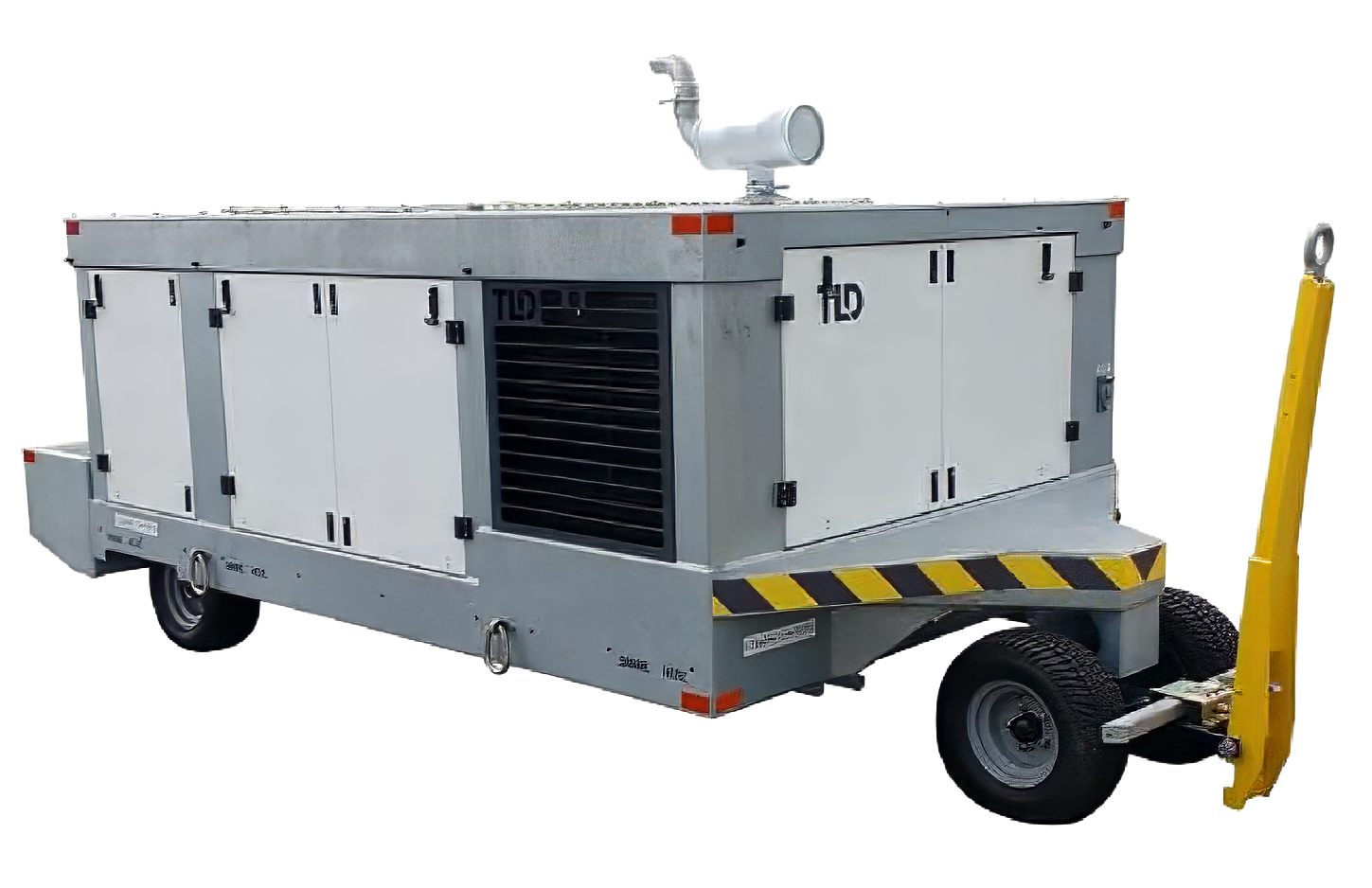
ACU-302S-H-CUP
ACU-302S Series Conditioned Air Units comprise a line of mobile diesel-electric air conditioning and heating units designed to service narrow-body aircraft up to the Airbus A321 and Boeing 737-900, as well as regional jets and commuter aircraft worldwide.
A fully electric configuration is also available for operations using an external electrical power supply.The ACU-302S delivers up to 105 kW, or 30 nominal tons, of cooling capacity and can be equipped with an optional 68.5 kW heating system. Using environmentally considerate R-407C refrigerant and commercially available components, the unit is designed to provide dependable performance, a long operational life and low maintenance requirements
General:
• Suitable for narrow-body aircraft up to A321 and B737-900, regional jets and commuter aircraft
• Up to 105 kW / 30 nominal tons of refrigeration capacity
• Optional 68.5 kW / 234,000 BTU per hour heating capacity
• Cooling air outlet temperature of approximately 2–4.5°C / 35–40°F under rated conditions
• Heating air outlet temperature of approximately 38–44°C / 100–120°F
• Airflow of up to 1.43 kg per second
• Twin scroll compressors for efficient and dependable operation
• Roof-mounted condenser
• Mechanical expansion valve
• R-407C refrigerant
• Mobile towable configuration with pneumatic tires
• Towbar-operated parking brake automatically applied when the towbar is raised
• Maximum towing speed of approximately 25 km/h / 16 mph
• Low-maintenance design using commercially available components
Diesel-Electric Unit:• Cummins diesel engine
• 60 kW generator output
• Available with Tier 3, Stage IIIA or Tier 4 Final emission configurations
• Approximately 191.5-liter fuel tank
• 24 VDC electrical system
• Designed for independent operation on airport ramps and remote aircraft stands
Electric Unit:• Available as a fully electric unit powered from the electrical grid
• Eliminates the need to operate the aircraft APU while parked
• Suitable for fixed-base operations and airport stands with compatible electrical infrastructure
• Helps reduce local emissions, fuel consumption and ramp noise during aircraft servicing